TOKOH
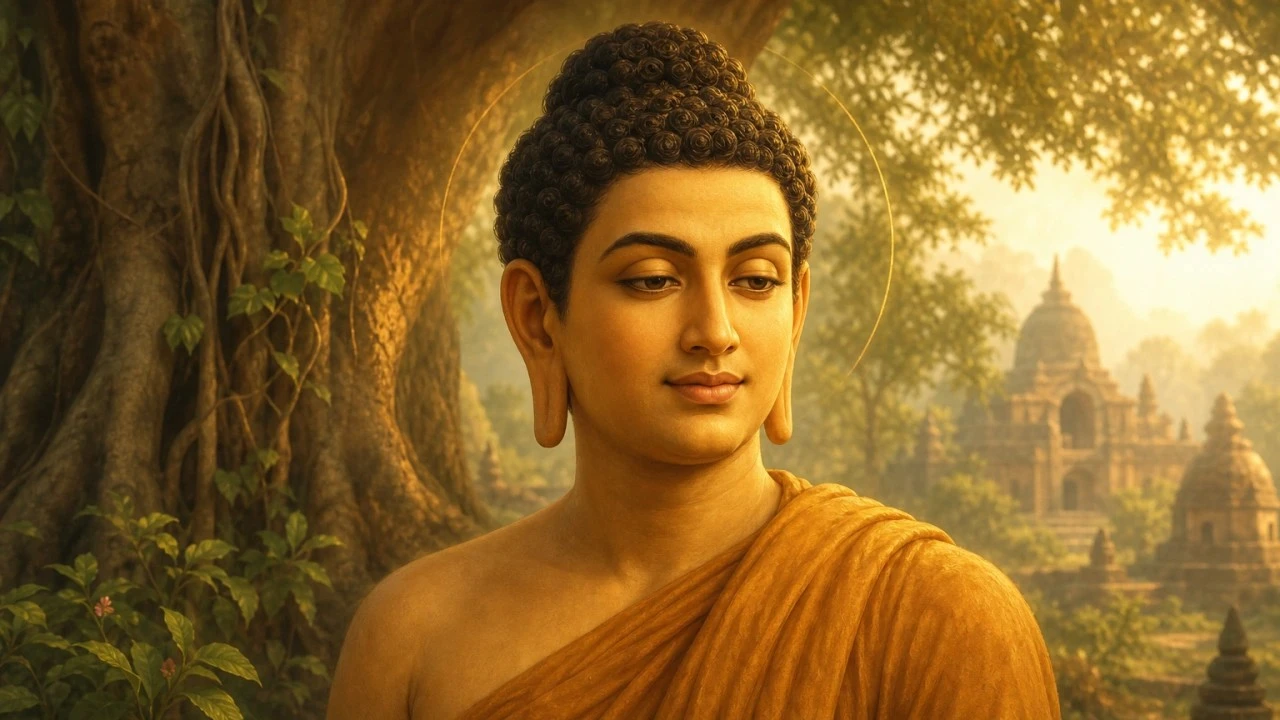
Buddha
Guru yang menolak generalisasi dan menilai praktik dari hasilnya.
Khotbah kepada Subha
Brahmana muda Subha bertanya apakah kehidupan rumah tangga atau kehidupan tanpa rumah lebih unggul. Buddha tidak menjawab secara mutlak: nilai sebuah jalan bergantung pada apakah ia dijalani dengan benar dan menghasilkan kebajikan. Inilah Subha Sutta.
Guru yang menolak generalisasi dan menilai praktik dari hasilnya.
Brahmana muda yang membandingkan kehidupan perumah tangga dan petapa.
Kota tempat Subha menemui Buddha.
Status luar tidak otomatis mulia; kehidupan rumah tangga maupun tanpa rumah harus dinilai dari kebajikan dan buah nyata yang dihasilkan.
Brahmana muda Subha menemui Buddha dan membandingkan kehidupan perumah tangga dengan kehidupan tanpa rumah. Ia menganggap kaum brahmana mengajarkan bahwa perumah tangga dapat melakukan jasa besar, sementara petapa hanya memiliki ruang sempit untuk berbuat kebajikan. Buddha menolak generalisasi itu dan meminta setiap jalan dinilai dari apakah praktiknya benar-benar berhasil. Percakapan kemudian membahas lima hal yang dianggap brahmana sebagai dasar perbuatan berjasa—kebenaran, pertapaan, kesucian, pembelajaran dan kemurahan hati. Buddha menunjukkan bagaimana kualitas-kualitas tersebut menemukan pemenuhan yang lebih dalam melalui batin yang bebas dari lima rintangan dan pengembangan cinta kasih, belas kasih, kegembiraan serta keseimbangan.
mn99:9.1 “Worthy Gotama, truth is the first thing.
mn99:9.2 Fervor is the second thing.
mn99:9.3 Chastity is the third thing.
mn99:9.4 Recitation is the fourth thing.
mn99:9.5 Generosity is the fifth thing.
mn99:9.6 These are the five things that the brahmins prescribe for making merit and succeeding in the skillful.
mn99:9.7 What do you say about this?”
mn99:9.8 “Well, student, is there even a single one of the brahmins who says this:
mn99:9.9 ‘I declare the result of these five things after realizing it with my own insight’?”
mn99:9.10 “No, worthy Gotama.”
mn99:9.11 “Well, is there even a single tutor of the brahmins, or a tutor’s tutor, or anyone back to the seventh generation of tutors, who says this:
mn99:9.12 ‘I declare the result of these five things after realizing it with my own insight’?”
mn99:9.13 “No, worthy Gotama.”
mn99:9.14 “Well, what of the ancient seers of the brahmins, namely Aṭṭhaka, Vāmaka, Vāmadeva, Vessāmitta, Yamadaggi, Aṅgīrasa, Bhāradvāja, Vāseṭṭha, Kassapa, and Bhagu? They were the authors and propagators of the hymns. Their hymnal was sung and propagated and compiled in ancient times; and these days, brahmins continue to sing and chant it, chanting what was chanted and teaching what was taught.
mn99:9.15 Did even they say:
mn99:9.16 ‘We declare the result of these five things after realizing it with our own insight’?”
mn99:9.17 “No, worthy Gotama.”
mn99:9.18 “So, student, it seems that there is not a single one of the brahmins,
mn99:9.20 not even anyone back to the seventh generation of tutors,
mn99:9.22 nor even the ancient seers of the brahmins
mn99:9.23 who says:
mn99:9.24 ‘We declare the result of these five things after realizing it with our own insight.’
mn99:9.25 Suppose there was a queue of blind men, each holding the one in front: the first one does not see, the middle one does not see, and the last one does not see.
mn99:9.26 In the same way, it seems to me that the brahmins’ statement turns out to be comparable to a queue of blind men: the first one does not see, the middle one does not see, and the last one does not see.”
Terjemahan Indonesia Tiga Keranjang dibuat dengan bantuan AI dan disajikan bersama teks Pāli serta English untuk memudahkan pembacaan dan perbandingan.