TOKOH
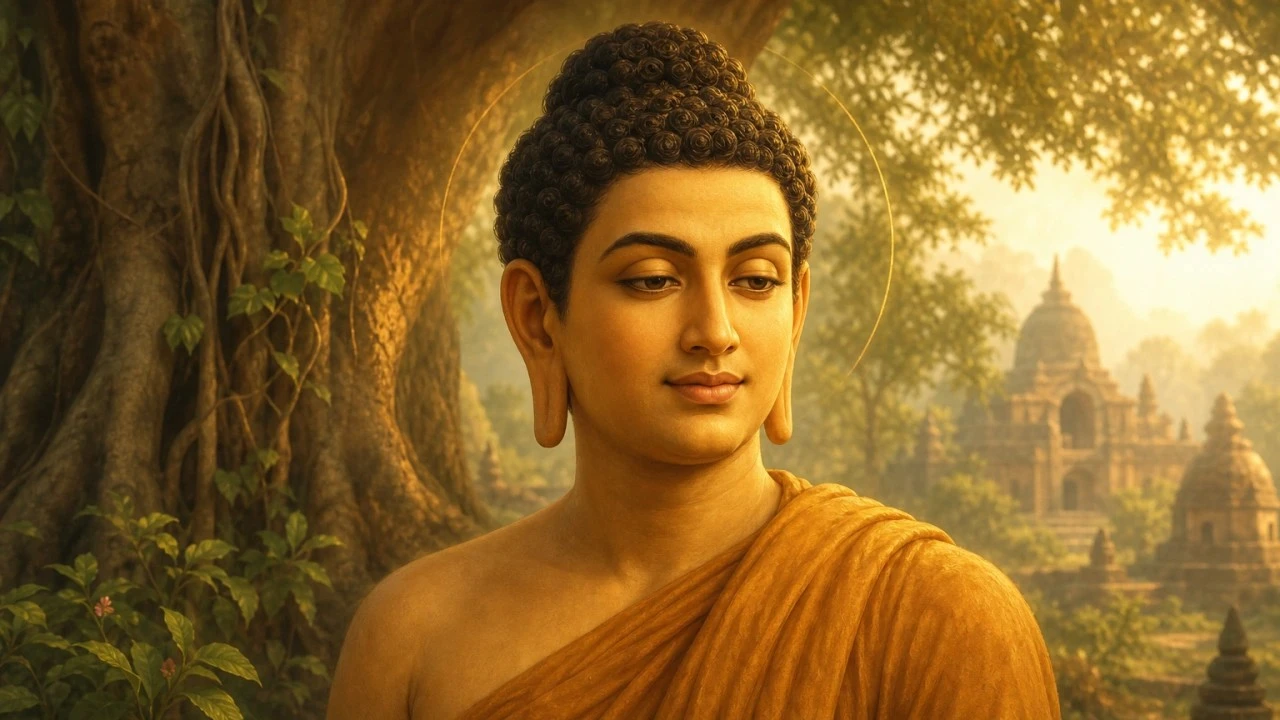
Buddha
Guru yang menguji klaim Vekhanassa dan menunjukkan kebahagiaan bebas dari nafsu.
Khotbah kepada Vekhanasa
Pengembara Vekhanassa memuji suatu keindahan tertinggi, tetapi tidak mampu menjelaskan apa yang dimaksud. Buddha menunjukkan bahwa kebebasan dari nafsu lebih luhur daripada mengejar keindahan yang masih bergantung pada indra. Inilah Vekhanassa Sutta.
Guru yang menguji klaim Vekhanassa dan menunjukkan kebahagiaan bebas dari nafsu.
Pengembara yang memuji keindahan tertinggi tanpa memahami dasarnya.
Kota tempat Vekhanassa menemui Buddha.
Yang benar-benar luhur bukan objek yang paling memikat, melainkan batin yang tidak lagi diperbudak oleh ketertarikan.
Pengembara Vekhanassa mendatangi Buddha dan memuji suatu ‘cahaya’ atau keindahan tertinggi yang menurutnya melampaui segala sesuatu. Buddha bertanya apa sebenarnya yang dimaksud, tetapi Vekhanassa hanya mengulangi klaimnya tanpa mampu menjelaskannya. Buddha lalu menunjukkan bahwa berbicara tentang sesuatu yang tidak pernah diketahui atau dilihat menyerupai orang yang jatuh cinta kepada perempuan tercantik di negeri tetapi tidak tahu siapa dia, dari keluarga mana, atau seperti apa rupanya. Percakapan beralih kepada kenikmatan indria dan kebahagiaan yang lebih tinggi. Buddha menegaskan bahwa pembebasan harus diketahui melalui pengalaman, bukan melalui pujian terhadap ideal yang tidak dipahami.
mn80:3.1 “Kaccāna, you could draw this out for a long time.
mn80:3.2 You say, ‘The ultimate splendor is the splendor compared to which no other splendor is finer.’ But you don’t describe that splendor.
mn80:3.3 Suppose a man was to say,
mn80:3.4 ‘Whoever the finest lady in the land is, it is her that I want, her I desire!’
mn80:3.5 They’d say to him,
mn80:3.6 ‘My man, that finest lady in the land who you desire—do you know whether she’s an aristocrat, a brahmin, a peasant, or a menial?’
mn80:3.7 Asked this, he’d say, ‘No.’
mn80:3.8 They’d say to him,
mn80:3.9 ‘My friend, that finest lady in the land who you desire—do you know her name or clan? Whether she’s tall or short or medium? Whether her skin is black, brown, or dingy? Whether she comes from such-and-such village, town, or city?’
mn80:3.10 Asked this, he’d say, ‘No.’
mn80:3.11 They’d say to him,
mn80:3.12 ‘My man, do you desire someone who you’ve never even known or seen?’
mn80:3.13 Asked this, he’d say, ‘Yes.’
mn80:3.14 What do you think, Kaccāna?
mn80:3.15 This being so, doesn’t that man’s statement turn out to have no demonstrable basis?”
mn80:3.16 “Clearly that’s the case, worthy Gotama.”
mn80:3.17 “In the same way, you say, ‘The ultimate splendor is the splendor compared to which no other splendor is finer.’ But you don’t describe that splendor.”
Terjemahan Indonesia Tiga Keranjang dibuat dengan bantuan AI dan disajikan bersama teks Pāli serta English untuk memudahkan pembacaan dan perbandingan.