TOKOH
Buddha
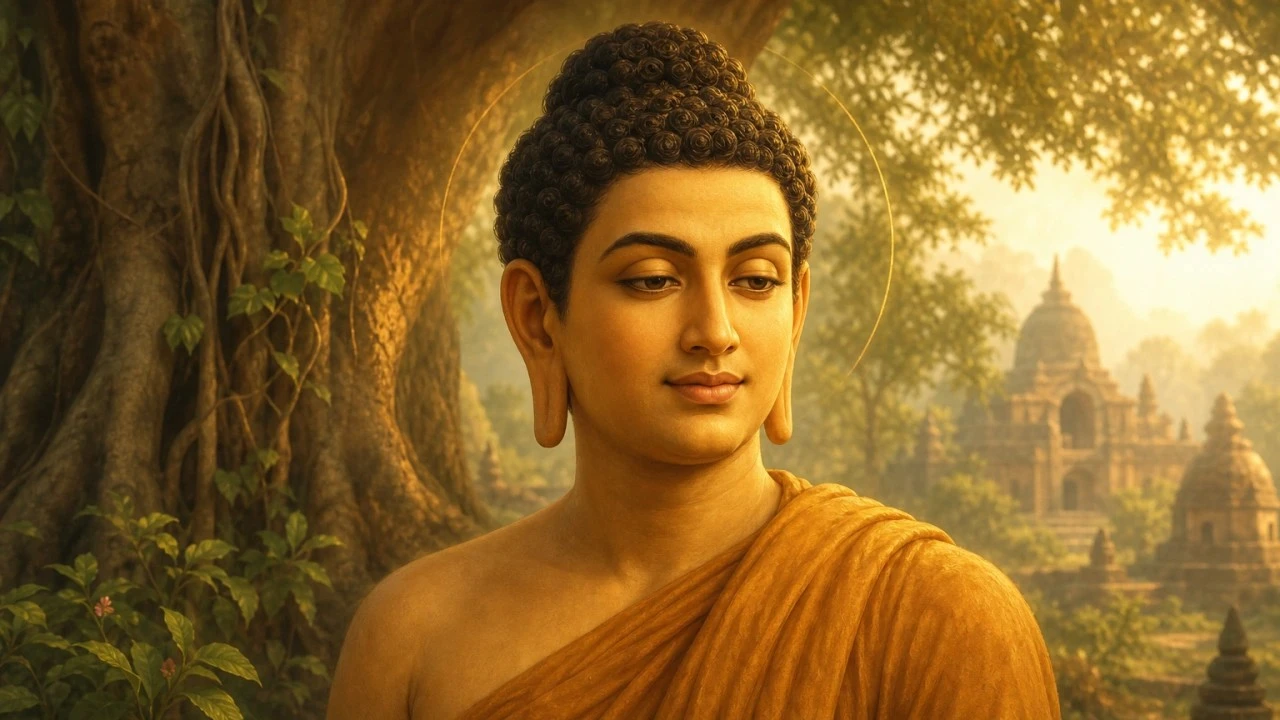
Guru yang membandingkan kenikmatan indria dengan rasa lega semu dari penyakit.
Khotbah kepada Māgaṇḍiya
Māgaṇḍiya menganggap kenikmatan indria sebagai kebahagiaan. Buddha menjawab dengan gambaran seorang penderita kusta yang menggaruk luka di dekat api: sesuatu dapat terasa nikmat justru karena penyakit belum sembuh. Inilah Māgaṇḍiya Sutta.
Guru yang membandingkan kenikmatan indria dengan rasa lega semu dari penyakit.
Pengembara yang mempertanyakan mengapa Buddha meninggalkan kenikmatan dunia.
Permukiman di negeri Kuru tempat dialog berlangsung.
Kenikmatan yang bergantung pada nafsu tidak sebanding dengan kedamaian batin yang telah sembuh dari kemelekatan.
Māgaṇḍiya terkejut ketika Buddha menyebut kenikmatan indria sebagai sesuatu yang telah beliau tinggalkan. Ia menganggap pandangan itu merendahkan kehidupan yang dinikmati manusia biasa. Buddha menjelaskan melalui kisah orang buta yang diberi pakaian kotor tetapi mengira pakaian itu bersih karena tidak mampu melihat. Setelah penglihatannya pulih, ia tidak lagi dapat ditipu. Demikian pula seseorang yang belum mengenal kebahagiaan yang lebih tinggi menganggap kenikmatan indria sebagai puncak kesenangan. Buddha memakai perumpamaan orang sakit kulit yang menggaruk luka dan membakarnya di atas bara: tindakan itu terasa nikmat justru karena penyakitnya. Kesembuhan mengubah seluruh penilaiannya tentang apa yang dahulu dianggap menyenangkan.
mn75:13.1 Suppose there was a person affected by leprosy, with sores and blisters on their limbs. Being devoured by worms, scratching with their nails at the opening of their wounds, they’d cauterize their body over a pit of glowing coals.
mn75:13.2 Their friends and colleagues, relatives and kin would get a surgeon to treat them.
mn75:13.3 The surgeon would make medicine for them,
mn75:13.4 and by using that they’d be cured of leprosy. They’d be healthy, happy, autonomous, master of themselves, able to go where they wanted.
mn75:13.5 Then they’d see another person affected by leprosy, with sores and blisters on their limbs, being devoured by worms, scratching with their nails at the opening of their wounds, cauterizing their body over a pit of glowing coals.
mn75:13.6 What do you think, Māgaṇḍiya?
mn75:13.7 Would that person envy that other person affected by leprosy for their pit of glowing coals or for taking medicine?”
mn75:13.8 “No, worthy Gotama.
mn75:13.9 Why is that?
mn75:13.10 Because you need to take medicine only when there’s a disease. When there’s no disease, there’s no need for medicine.”
Terjemahan Indonesia Tiga Keranjang dibuat dengan bantuan AI dan disajikan bersama teks Pāli serta English untuk memudahkan pembacaan dan perbandingan.