TOKOH
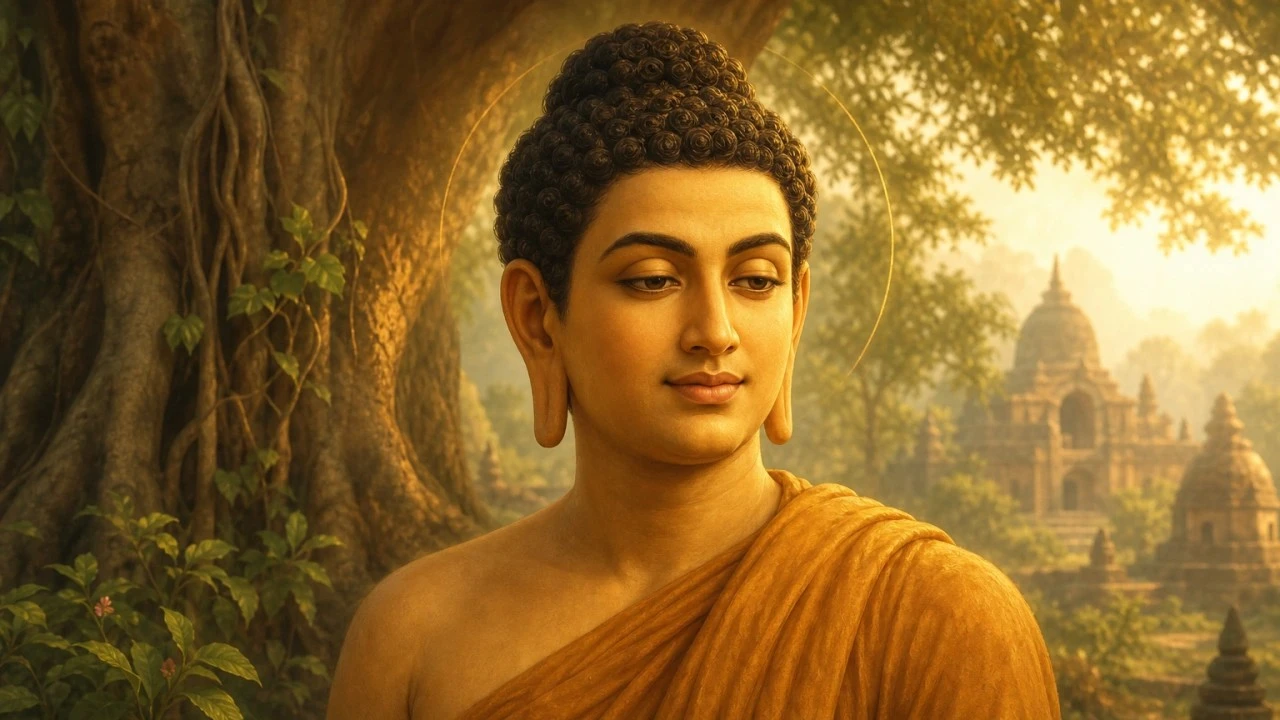
Buddha
Guru yang meyakinkan Upāli lewat perdebatan tentang mana yang lebih menentukan akibat perbuatan — jasmani atau pikiran.
Khotbah kepada Upāli
Diutus gurunya untuk mengalahkan Buddha dalam perdebatan, perumah tangga kaya Upāli justru menjadi yakin dan berpindah menjadi pengikut Buddha. Inilah Upāli Sutta.
Guru yang meyakinkan Upāli lewat perdebatan tentang mana yang lebih menentukan akibat perbuatan — jasmani atau pikiran.
Perumah tangga kaya, murid utama Nātaputta, yang diutus mendebat Buddha namun akhirnya berpindah keyakinan.
Taman mangga di Nāḷandā, tempat perdebatan antara Buddha dan Upāli berlangsung.
Berbeda dari pandangan Jain yang menekankan perbuatan jasmani, Buddha menjelaskan bahwa niat dalam pikiran adalah faktor paling menentukan akibat suatu perbuatan.
Dīgha Tapassī, seorang pengikut Nigaṇṭha Nātaputta, berbicara dengan Buddha tentang perbuatan tubuh, ucapan dan pikiran. Ketika ia melaporkan percakapan itu kepada gurunya, Nātaputta mengutus Upāli—seorang pendukung terkemuka dan pendebat yang percaya diri—untuk mengalahkan Buddha dalam perdebatan. Upāli datang dengan keyakinan bahwa tindakan tubuh adalah yang paling menentukan, tetapi melalui rangkaian pertanyaan dan perumpamaan Buddha membawanya melihat besarnya peranan niat dan pikiran. Pandangan Upāli berubah dan ia menyatakan diri sebagai pengikut Buddha. Buddha justru memintanya mempertimbangkan keputusan itu dengan matang dan tetap memberikan dana kepada para Nigaṇṭha yang sebelumnya ia dukung, sikap yang semakin mengesankan Upāli.
mn56:29.1 When he had spoken, the householder Upāli rose from his seat, arranged his robe over one shoulder, raised his cupped palms in the direction of the Buddha, and said to the Jain Ñātika,
mn56:29.2 “Well then, sir, hear whose disciple I am:
mn56:29.3 The attentive one, free of delusion,
mn56:29.4 with hard-heartedness dissolved, victor in battle;
mn56:29.5 he’s untroubled and very even-minded,
mn56:29.6 with the virtue of an elder and the wisdom of a saint,
mn56:29.7 immaculate in the midst of it all:
mn56:29.8 he is the Buddha, and I am his disciple.
mn56:29.9 He has no indecision, he’s content,
mn56:29.10 joyful, he has spat out the world’s bait;
mn56:29.11 he has completed the ascetic’s task as a man,
mn56:29.12 a man who bears his final body;
mn56:29.13 he’s beyond compare, he’s stainless:
mn56:29.14 he is the Buddha, and I am his disciple.
mn56:29.15 He’s free of doubt, he’s skillful,
mn56:29.16 he’s a trainer, an excellent charioteer;
mn56:29.17 supreme, with brilliant qualities,
mn56:29.18 confident, his light shines forth;
mn56:29.19 he has cut off conceit, he’s a hero:
mn56:29.20 he is the Buddha, and I am his disciple.
mn56:29.21 The boss bull, immeasurable,
mn56:29.22 profound, sagacious;
mn56:29.23 he is the maker of sanctuary, knowledgeable,
mn56:29.24 firm in principle and restrained;
mn56:29.25 he has slipped his chains and is liberated:
mn56:29.26 he is the Buddha, and I am his disciple.
mn56:29.27 He’s a giant, living remotely,
mn56:29.28 he’s ended the fetters and is liberated;
mn56:29.29 he’s skilled in debate and cleansed,
mn56:29.30 with banner lowered, desireless;
mn56:29.31 he’s tamed, and doesn’t proliferate:
mn56:29.32 he is the Buddha, and I am his disciple.
mn56:29.33 He is the seventh seer, free of deceit,
mn56:29.34 with three knowledges, he has attained to divinity,
mn56:29.35 he has bathed, he knows philology,
mn56:29.36 he’s tranquil, he understands what is known;
mn56:29.37 he is Sakka the Able, Purindada the Firstgiver:
mn56:29.38 he is the Buddha, and I am his disciple.
mn56:29.39 The Noble One, evolved,
mn56:29.40 he has attained the goal and explains it;
mn56:29.41 he is mindful, discerning,
mn56:29.42 neither leaning forward nor pulling back,
mn56:29.43 he’s unstirred, attained to mastery:
mn56:29.44 he is the Buddha, and I am his disciple.
mn56:29.45 Transcendent, he practices absorption,
mn56:29.46 no inner thoughts arising, he is pure,
mn56:29.47 independent and fearless;
mn56:29.48 secluded, he has reached the peak,
mn56:29.49 crossed over, he helps others across:
mn56:29.50 he is the Buddha, and I am his disciple.
mn56:29.51 He’s peaceful, his wisdom is vast,
mn56:29.52 with great wisdom, he’s free of greed;
mn56:29.53 he is the Realized One, the Holy One,
mn56:29.54 unrivaled, unequaled,
mn56:29.55 self-assured, and subtle:
mn56:29.56 he is the Buddha, and I am his disciple.
mn56:29.57 He has cut off craving and is awakened,
mn56:29.58 free of fuming, unsullied;
mn56:29.59 a mighty spirit worthy of offerings,
mn56:29.60 best of men, inestimable,
mn56:29.61 grand, he has reached the peak of glory:
mn56:29.62 he is the Buddha, and I am his disciple.”
Terjemahan Indonesia Tiga Keranjang dibuat dengan bantuan AI dan disajikan bersama teks Pāli serta English untuk memudahkan pembacaan dan perbandingan.