TOKOH
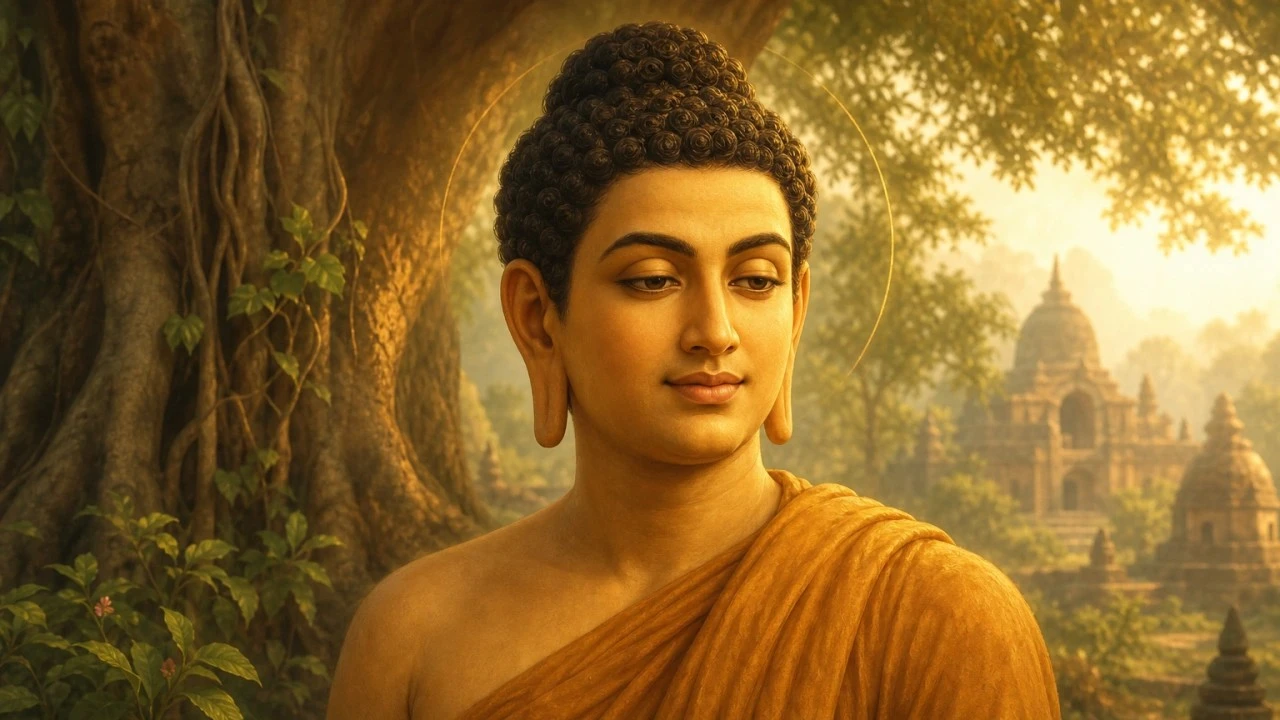
Buddha
Guru yang mengoreksi pandangan keliru Ariṭṭha lewat perumpamaan ular berbisa dan rakit.
Khotbah tentang Perumpamaan Ular
Menanggapi pandangan keliru Bhikkhu Ariṭṭha, Buddha mengajarkan Alagaddūpama Sutta: ajaran harus dipegang dengan benar seperti memegang ular berbisa, dan dipakai untuk menyeberang seperti rakit — bukan digenggam erat-erat.
Guru yang mengoreksi pandangan keliru Ariṭṭha lewat perumpamaan ular berbisa dan rakit.
Mantan penangkap burung nasar yang menjadi bhikkhu, memiliki pandangan keliru bahwa hal-hal yang dilarang Buddha sebenarnya tidak menghalangi.

Wihara di Sāvatthī, tempat Buddha menyampaikan koreksi ini kepada para bhikkhu.
Ajaran yang dipahami keliru bagaikan memegang ular berbisa dari arah yang salah — melukai diri sendiri; ajaran yang dipahami benar bagaikan rakit untuk menyeberang, bukan untuk dipeluk selamanya.
Seorang bhikkhu bernama Ariṭṭha bersikeras bahwa kenikmatan yang disebut sebagai penghalang oleh Buddha sebenarnya tidak menghalangi latihan. Para bhikkhu mencoba mengoreksinya, tetapi ia tetap mempertahankan pandangannya sehingga perkara itu dibawa kepada Buddha. Buddha menegurnya dan menjelaskan bahaya memahami Dhamma secara keliru melalui perumpamaan orang yang menangkap ular pada bagian yang salah. Ia kemudian memberikan perumpamaan rakit: ajaran dipakai untuk menyeberang, bukan untuk digenggam sebagai milik. Pembicaraan berlanjut pada enam landasan pandangan tentang diri dan menunjukkan bagaimana seseorang yang melihat semuanya tanpa ‘aku’ dan ‘milikku’ tidak lagi terguncang oleh kehilangan.
mn22:3.1 They went up to Ariṭṭha and said to him,
mn22:3.2 “Is it really true, Reverend Ariṭṭha, that you have such a harmful misconception:
mn22:3.3 ‘As I understand the Buddha’s teaching, the acts that he says are obstructions are not really obstructions for the one who performs them’?”
mn22:3.4 “Indeed, reverends. As I understand the Buddha’s teaching, the acts that he says are obstructions are not really obstructions for the one who performs them.”
mn22:3.5 Then, wishing to dissuade Ariṭṭha from his view, the mendicants pursued, pressed, and grilled him,
mn22:3.6 “Don’t say that, Ariṭṭha! Don’t misrepresent the Buddha, for misrepresentation of the Buddha is not good. And the Buddha would not say that.
mn22:3.7 In many ways the Buddha has said that obstructive acts are obstructive, and that they really do obstruct the one who performs them.
mn22:3.8 The Buddha says that sensual pleasures give little gratification and much suffering and distress, and they are all the more full of drawbacks.
mn22:3.9 With the similes of a skeleton …
mn22:3.10 a scrap of meat …
mn22:3.11 a grass torch …
mn22:3.12 a pit of glowing coals …
mn22:3.13 a dream …
mn22:3.14 borrowed goods …
mn22:3.15 fruit on a tree …
mn22:3.16 a butcher’s knife and chopping board …
mn22:3.17 swords and spears …
mn22:3.18 a cobra’s head, the Buddha says that sensual pleasures give little gratification and much suffering and distress, and they are all the more full of drawbacks.”
mn22:3.19 But even though the mendicants pursued, pressed, and grilled him in this way, Ariṭṭha obstinately stuck to his misconception and insisted on it.
mn22:3.21 When they weren’t able to dissuade Ariṭṭha from his view, the mendicants went to the Buddha, bowed, sat down to one side, and told him what had happened.
Terjemahan Indonesia Tiga Keranjang dibuat dengan bantuan AI dan disajikan bersama teks Pāli serta English untuk memudahkan pembacaan dan perbandingan.