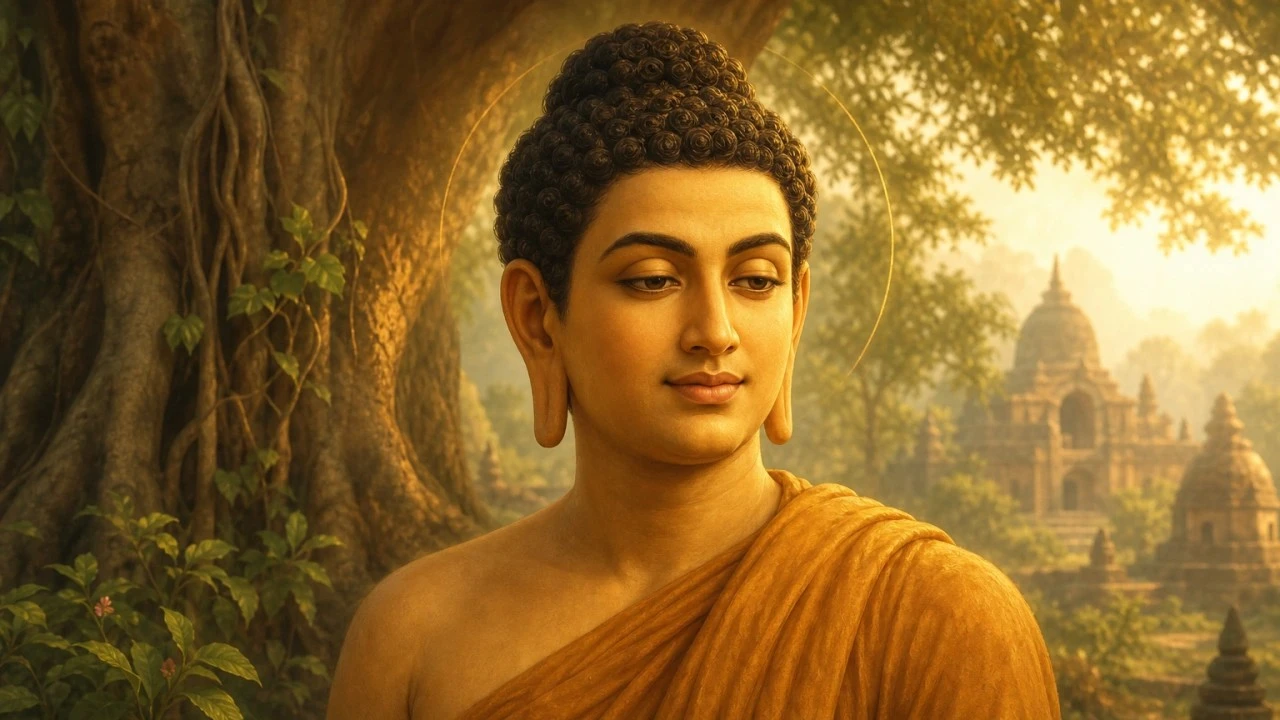
TOKOH
Buddha
Buddha menasihati para bhikkhu agar ajaran dan perilaku mereka tidak menimbulkan pertengkaran.
Khotbah tentang Analisis Tanpa Pertikaian

Araṇavibhaṅga Sutta mengajarkan cara hidup dan berbicara tanpa konflik.
Buddha menasihati para bhikkhu agar ajaran dan perilaku mereka tidak menimbulkan pertengkaran.
Buddha menasihati para bhikkhu agar ajaran dan perilaku mereka tidak menimbulkan pertengkaran.
Latar sutta berada di lingkungan komunitas latihan.
Kebenaran perlu disampaikan dengan ucapan yang tepat dan tidak memecah.
Buddha mengajarkan cara menjalani dan menyampaikan Dhamma tanpa menciptakan konflik. Ia menolak dua ekstrem kenikmatan indria dan penyiksaan diri, lalu membahas bagaimana pujian, kritik dan pengajaran dapat disampaikan tanpa diam-diam meninggikan diri atau menyerang orang lain. Bahkan istilah dan bahasa setempat tidak perlu dijadikan sumber pertengkaran; maksud dapat disampaikan tanpa bersikeras bahwa hanya satu sebutan yang benar. Uraian itu menjadikan kedamaian bukan sikap pasif, melainkan kecakapan berbicara dan bertindak tegas tanpa menambah permusuhan.
mn139:8.1 And how is there neither flattering nor rebuking, and just teaching Dhamma?
mn139:8.2 You don’t say: ‘All those who indulge in the happiness of the pleasure linked to sensuality—low, crude, ordinary, ignoble, and pointless—are beset by pain, harm, stress, and fever, and they are practicing the wrong way.’
mn139:8.3 Rather, by saying this you just teach Dhamma:
mn139:8.4 ‘The indulgence is a principle beset by pain, harm, stress, and fever, and it is the wrong way.’
mn139:8.7 You don’t say: ‘All those who have broken off indulging in the happiness of the pleasure linked to sensuality are free of pain, harm, stress, and fever, and they are practicing the right way.’
mn139:8.8 Rather, by saying this you just teach Dhamma:
mn139:8.9 ‘Breaking off the indulgence is a principle free of pain, harm, stress, and fever, and it is the right way.’
mn139:8.12 You don’t say: ‘All those who indulge in self-mortification—painful, ignoble, and pointless—are beset by pain, harm, stress, and fever, and they are practicing the wrong way.’
mn139:8.13 Rather, by saying this you just teach Dhamma:
mn139:8.14 ‘The indulgence is a principle beset by pain, harm, stress, and fever, and it is the wrong way.’
mn139:8.17 You don’t say: ‘All those who have broken off indulging in self-mortification are free of pain, harm, stress, and fever, and they are practicing the right way.’
mn139:8.18 Rather, by saying this you just teach Dhamma:
mn139:8.19 ‘Breaking off the indulgence is a principle free of pain, harm, stress, and fever, and it is the right way.’
mn139:8.22 You don’t say: ‘All those who have not given up the fetter of continued existence are beset by pain, harm, stress, and fever, and they are practicing the wrong way.’
mn139:8.23 Rather, by saying this you just teach Dhamma:
mn139:8.24 ‘When the fetter of continued existence is not given up, continued existence is also not given up.’
mn139:8.26 You don’t say: ‘All those who have given up the fetter of continued existence are free of pain, harm, stress, and fever, and they are practicing the right way.’
mn139:8.27 Rather, by saying this you just teach Dhamma:
mn139:8.28 ‘When the fetter of continued existence is given up, continued existence is also given up.’
mn139:8.30 That’s how there is neither flattering nor rebuking, and just teaching Dhamma.
mn139:8.31 ‘Know what it means to flatter and to rebuke.
mn139:8.32 Knowing these, avoid them, and just teach Dhamma.’
mn139:8.33 That’s what I said, and this is why I said it.
Terjemahan Indonesia Tiga Keranjang dibuat dengan bantuan AI dan disajikan bersama teks Pāli serta English untuk memudahkan pembacaan dan perbandingan.