TOKOH
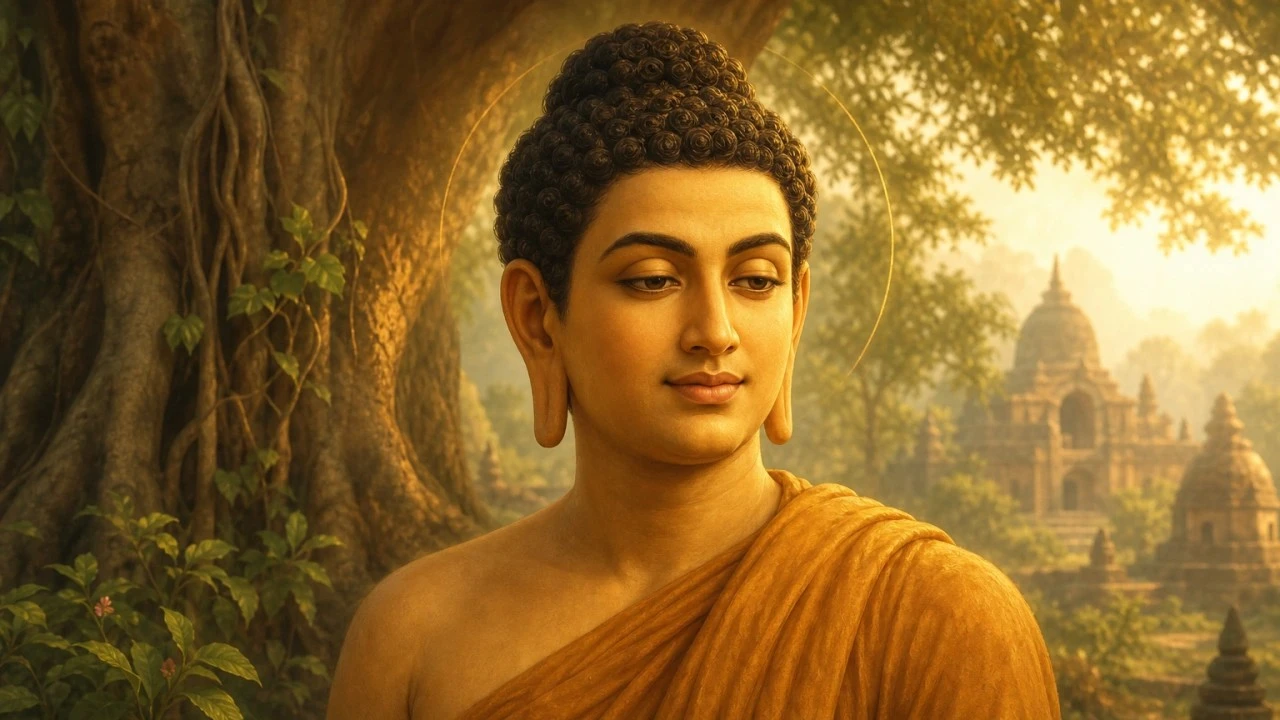
Buddha
Percakapan bermula dari Samiddhi dan berkembang menjadi penjelasan Buddha kepada Ānanda.
Khotbah tentang Analisis Perbuatan yang Lebih Panjang
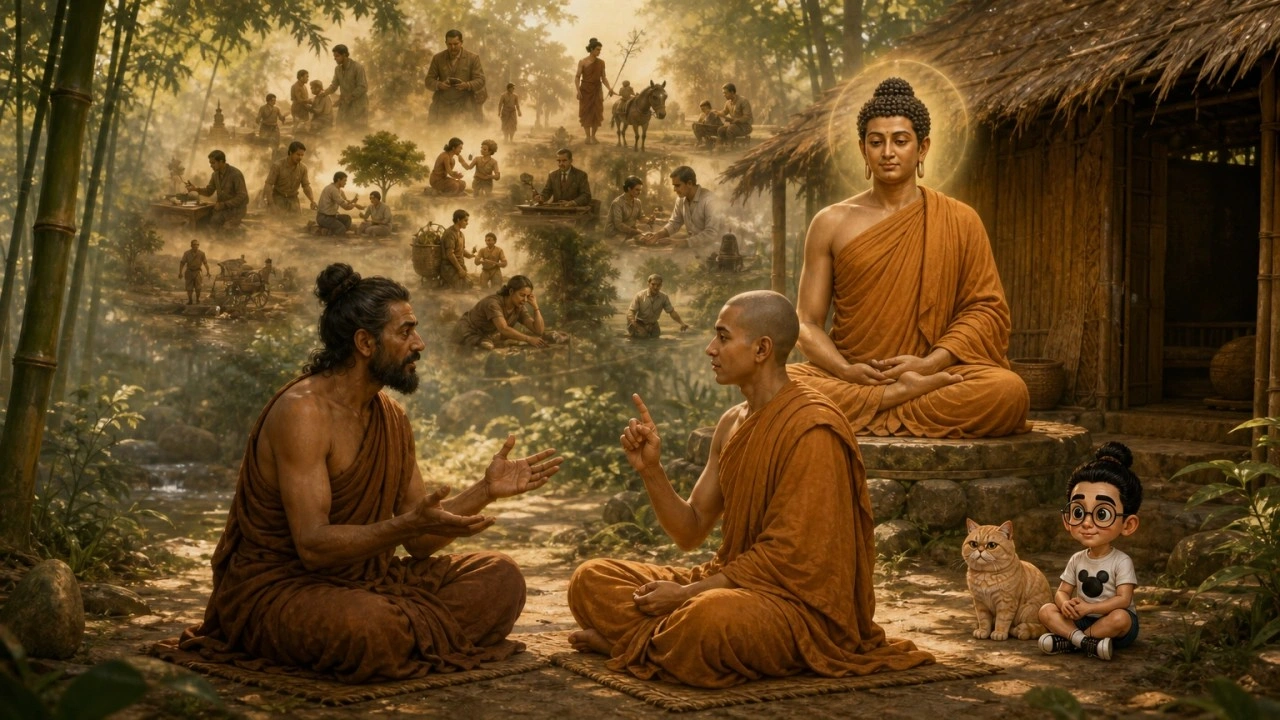
Mahākammavibhaṅga Sutta memperdalam pembahasan kamma dan mengingatkan bahwa akibat perbuatan tidak selalu tampak sederhana.
Percakapan bermula dari Samiddhi dan berkembang menjadi penjelasan Buddha kepada Ānanda.
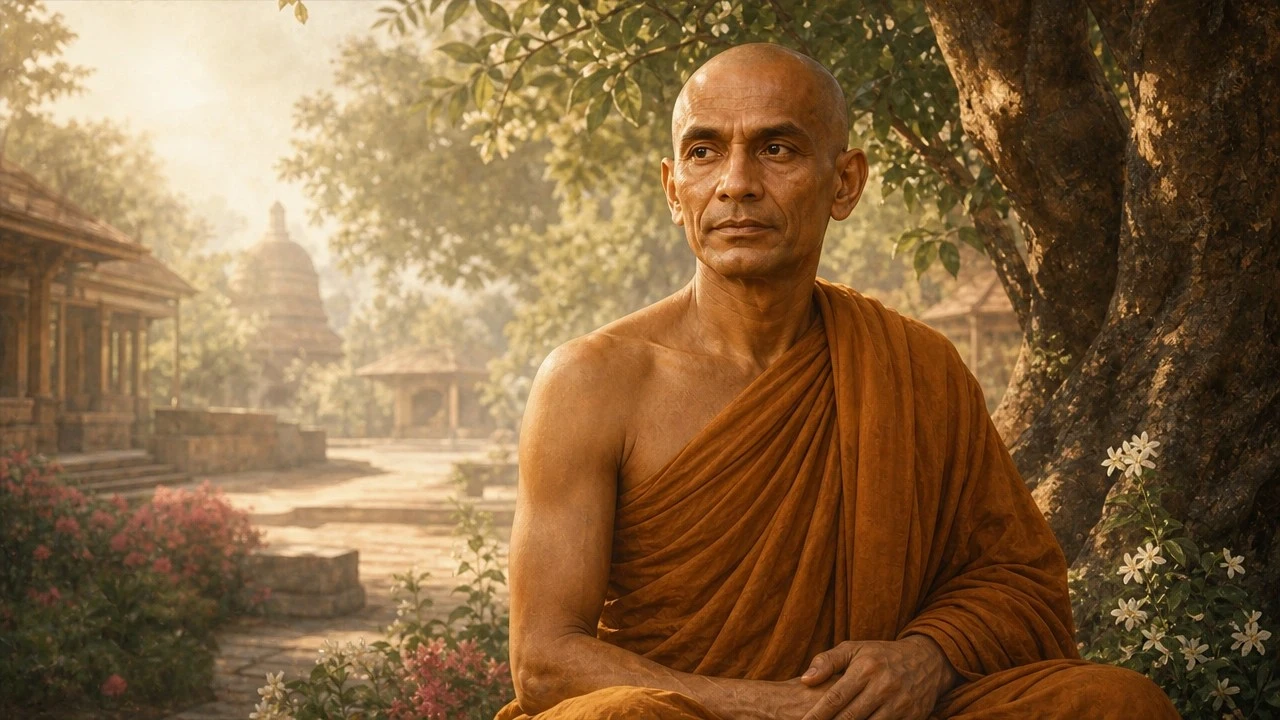
Percakapan bermula dari Samiddhi dan berkembang menjadi penjelasan Buddha kepada Ānanda.
Percakapan bermula dari Samiddhi dan berkembang menjadi penjelasan Buddha kepada Ānanda.
Latar sutta berada di wilayah Rājagaha.
Kamma perlu dipahami dengan hati-hati karena hasil perbuatan dapat matang dalam cara dan waktu berbeda.
Persoalan kamma bermula dari percakapan pengembara Potaliputta dengan Bhikkhu Samiddhi dan akhirnya dibawa kepada Buddha. Buddha menunjukkan bahaya membuat kesimpulan terlalu cepat tentang hubungan perbuatan dan hasil kelahiran kembali. Seseorang dapat melakukan perbuatan buruk tetapi tampak menuju keadaan baik, atau melakukan perbuatan baik tetapi tampak mengalami hasil buruk, karena satu kasus tidak memperlihatkan seluruh rangkaian kamma yang telah dibuat dan waktu kematangannya. Dengan menguraikan beberapa kemungkinan tindakan, pandangan menjelang kematian dan hasil kelahiran kembali, Buddha menolak generalisasi sederhana tanpa menyangkal bekerjanya kamma.
mn136:2.1 Now at that time Venerable Samiddhi was staying in a wilderness hut.
mn136:2.2 Then as the wanderer Potaliputta was going for a walk he came up to Venerable Samiddhi and exchanged greetings with him.
mn136:2.3 When the greetings and polite conversation were over, he sat down to one side and said to him:
mn136:2.4 “Reverend Samiddhi, I have heard and learned this in the presence of the ascetic Gotama:
mn136:2.5 ‘Deeds by way of body and speech are done in vain. Only mental deeds are real.’
mn136:2.6 And: ‘There is such an attainment where the one who enters it does not feel anything at all.’”
mn136:2.7 “Don’t say that, Reverend Potaliputta, don’t say that! Don’t misrepresent the Buddha, for misrepresentation of the Buddha is not good. And the Buddha would not say this:
mn136:2.8 ‘Deeds by way of body and speech are done in vain. Only mental deeds are real.’
mn136:2.9 But, reverend, there is such an attainment where the one who enters it does not feel anything at all.”
mn136:2.10 “Reverend Samiddhi, how long has it been since you went forth?”
mn136:2.11 “Not long, reverend: three years.”
mn136:2.12 “Well now, what are we to say to the senior mendicants, when even such a junior mendicant imagines their Teacher needs defending?
mn136:2.13 After doing an intentional deed by way of body, speech, or mind, reverend, what does one feel?”
mn136:2.14 “After doing an intentional deed by way of body, speech, or mind, reverend, one feels suffering.”
mn136:2.15 Then, neither approving nor rejecting Samiddhi’s statement, Potaliputta
mn136:2.16 rose from his seat and left.
Terjemahan Indonesia Tiga Keranjang dibuat dengan bantuan AI dan disajikan bersama teks Pāli serta English untuk memudahkan pembacaan dan perbandingan.