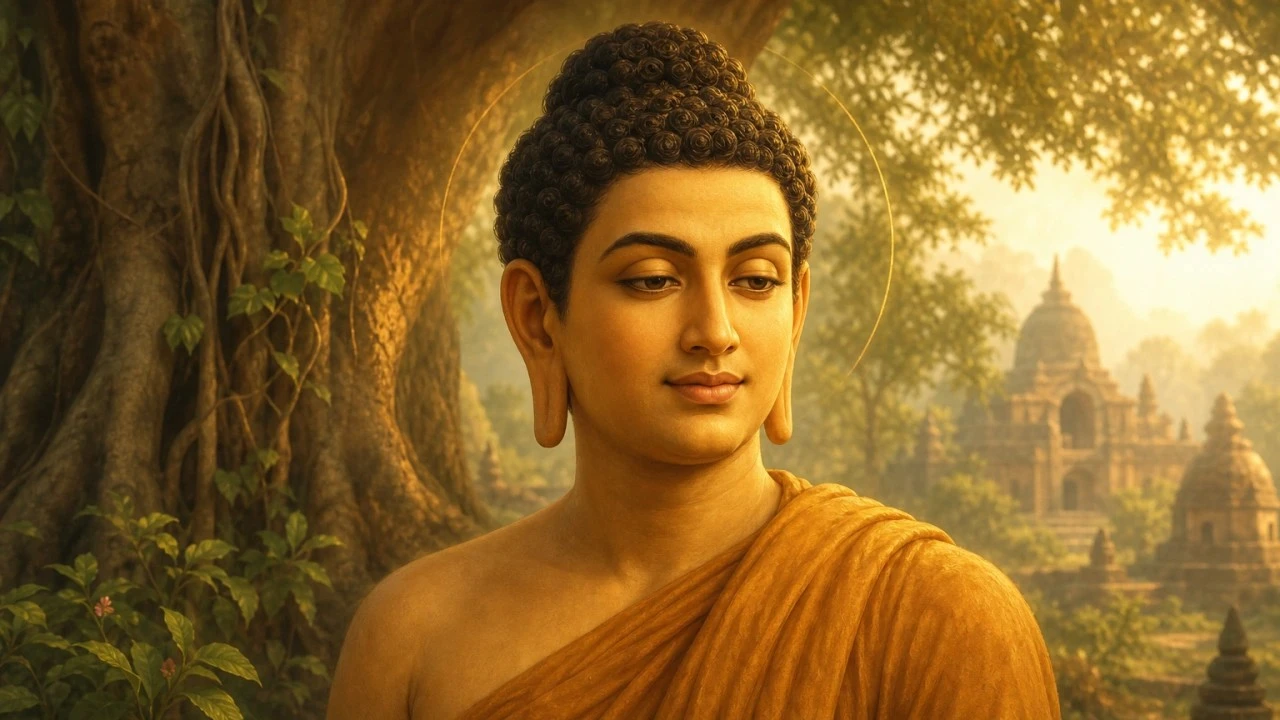
TOKOH
Buddha
Ānanda bertanya dan menerima penjelasan langsung dari Buddha tentang praktik kekosongan.
Cūḷasuññatasutta
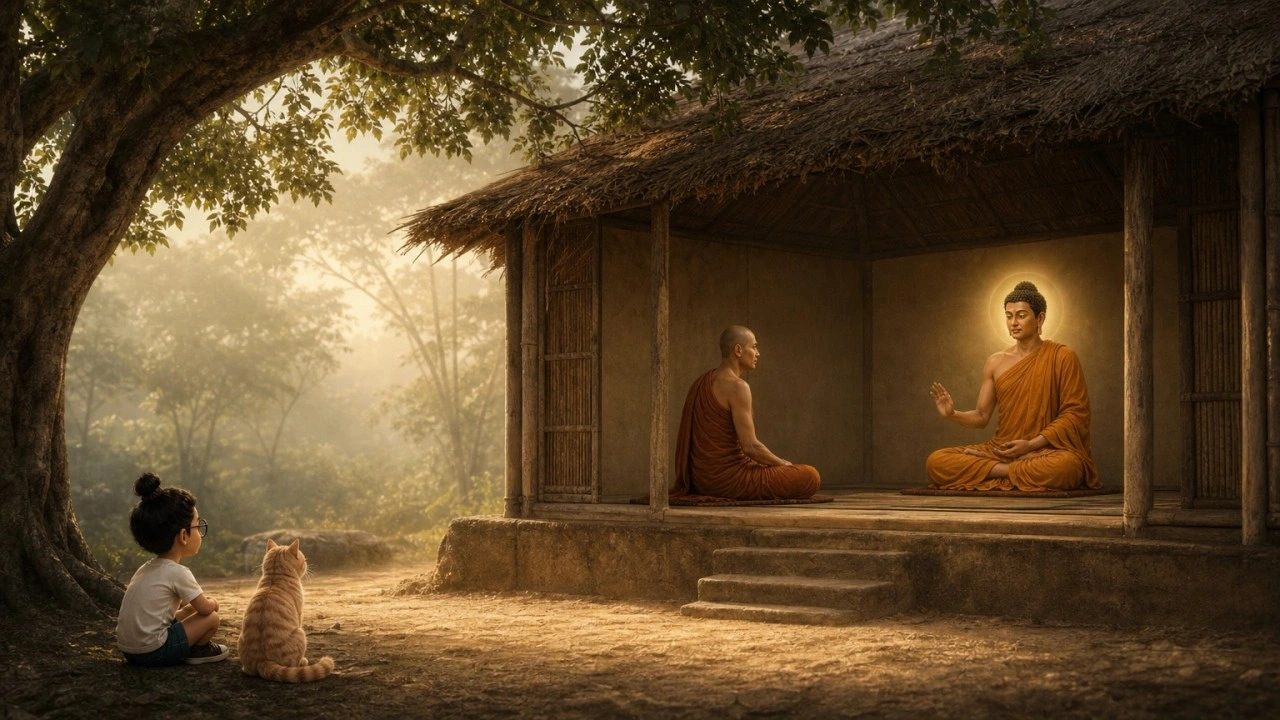
Cūḷasuññata Sutta membahas kekosongan sebagai cara melihat pengalaman dengan lebih lapang. Ajaran ini membantu pembaca memahami bagaimana batin dapat bebas dari keramaian batin yang tidak perlu.
Ānanda bertanya dan menerima penjelasan langsung dari Buddha tentang praktik kekosongan.
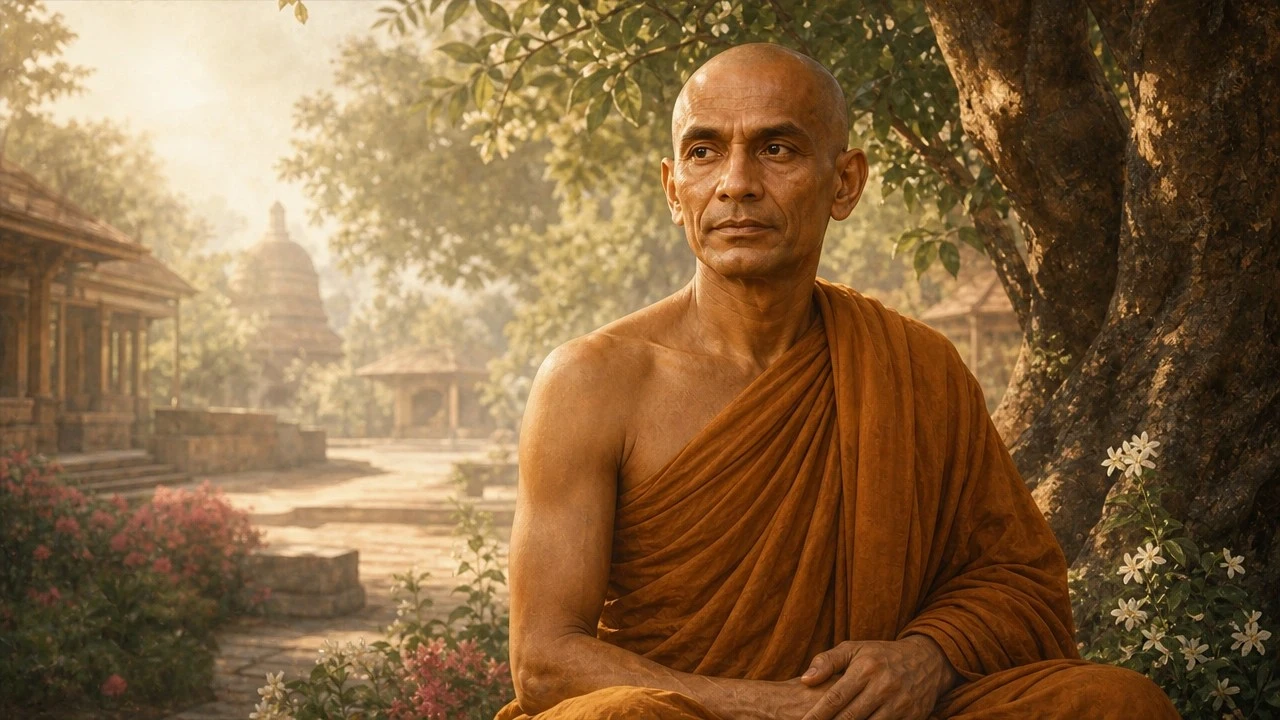
Ānanda bertanya dan menerima penjelasan langsung dari Buddha tentang praktik kekosongan.
Latar sutta berada di Pubbārāma, salah satu tempat penting pembabaran Dhamma di Sāvatthī.
Kekosongan bukan kehampaan dingin, melainkan cara melihat yang membebaskan batin dari beban yang tidak perlu.
Ānanda mengingat bahwa Buddha sering berdiam dalam kekosongan dan meminta penjelasan. Buddha lalu menunjukkan latihan yang bergerak bertahap: tidak memperhatikan persepsi desa dan manusia, lalu berdiam pada hutan; dari sana perhatian dimurnikan menuju persepsi tanah, ruang tanpa batas, kesadaran tanpa batas, ketiadaan, bukan-persepsi-juga-bukan-tanpa-persepsi, hingga konsentrasi tanpa tanda. Pada setiap tahap praktisi melihat dengan jujur gangguan apa yang sudah tidak hadir dan apa yang masih tersisa. Uraian berakhir ketika bahkan gangguan yang paling halus ditinggalkan dan pembebasan diketahui secara langsung.
mn121:4.1 Consider this stilt longhouse of Migāra’s mother. It’s empty of elephants, cows, horses, and mares; of gold and silver; and of gatherings of men and women.
mn121:4.2 There is only this that is not emptiness, namely, the oneness dependent on the mendicant Saṅgha.
mn121:4.3 In the same way, a mendicant—ignoring the perception of the village and the perception of people—focuses on the oneness dependent on the perception of wilderness.
mn121:4.4 Their mind leaps forth, gains confidence, settles down, and becomes decided in that perception of wilderness.
mn121:4.5 They understand:
mn121:4.6 ‘Here there is no stress due to the perception of village or the perception of people.
mn121:4.7 There is only this modicum of stress, namely the oneness dependent on the perception of wilderness.’
mn121:4.8 They understand: ‘This field of perception is empty of the perception of the village. It is empty of the perception of people.
mn121:4.9 There is only this that is not emptiness, namely the oneness dependent on the perception of wilderness.’
mn121:4.10 And so they regard it as empty of what is not there, but as to what remains they understand that it is present.
mn121:4.11 That’s how emptiness manifests in them—genuine, undistorted, and pure.
Terjemahan Indonesia Tiga Keranjang dibuat dengan bantuan AI dan disajikan bersama teks Pāli serta English untuk memudahkan pembacaan dan perbandingan.