dn22:2.0.1 1. Observing the Body
BAGIAN 2
dn22:2.0.2 1.1. Mindfulness of Breathing
dn22:2.1 And how does a mendicant meditate observing an aspect of the body?
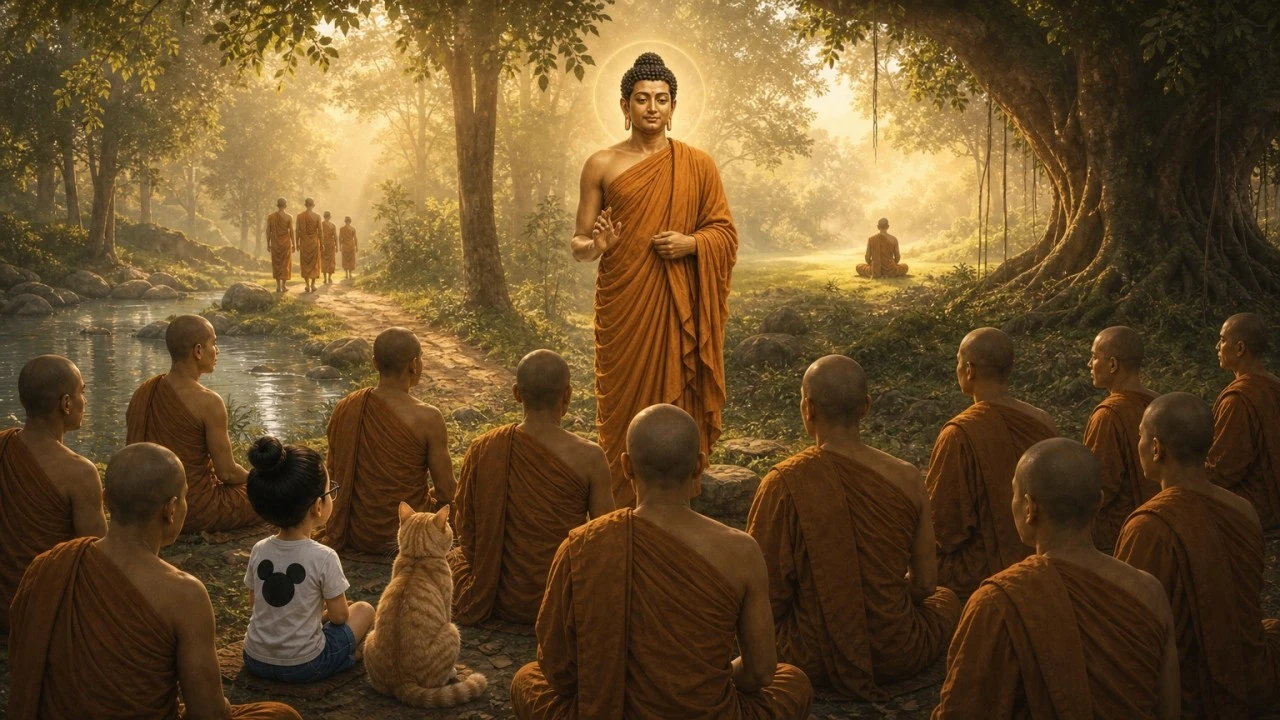
dn22:2.2 It’s when a mendicant—gone to a wilderness, or to the root of a tree, or to an empty hut—sits down cross-legged, sets their body straight, and brings mindfulness to the present.
dn22:2.3 Just mindful, they breathe in. Mindful, they breathe out.
dn22:2.4 Breathing in heavily they know: ‘I’m breathing in heavily.’ Breathing out heavily they know: ‘I’m breathing out heavily.’
dn22:2.5 Breathing in lightly they know: ‘I’m breathing in lightly.’ Breathing out lightly they know: ‘I’m breathing out lightly.’
dn22:2.6 They practice like this: ‘I’ll breathe in experiencing the whole body.’ They practice like this: ‘I’ll breathe out experiencing the whole body.’
dn22:2.7 They practice like this: ‘I’ll breathe in stilling the physical process.’ They practice like this: ‘I’ll breathe out stilling the physical process.’
dn22:2.8 It’s like a deft lathe-turner or lathe-turner’s apprentice. When drawing a long pull they know: ‘I’m drawing a long pull,’ and when drawing a short pull they know: ‘I’m drawing a short pull.’
dn22:2.11 And so they meditate observing an aspect of the body internally, externally, and both internally and externally.
dn22:2.12 With respect to the body, they meditate observing the liability to originate, to vanish, and to originate and vanish.
dn22:2.13 Or mindfulness is established that the body exists, to the extent necessary for knowledge and mindfulness. They meditate independent, not grasping at anything in the world.
dn22:2.14 That’s how a mendicant meditates by observing an aspect of the body.